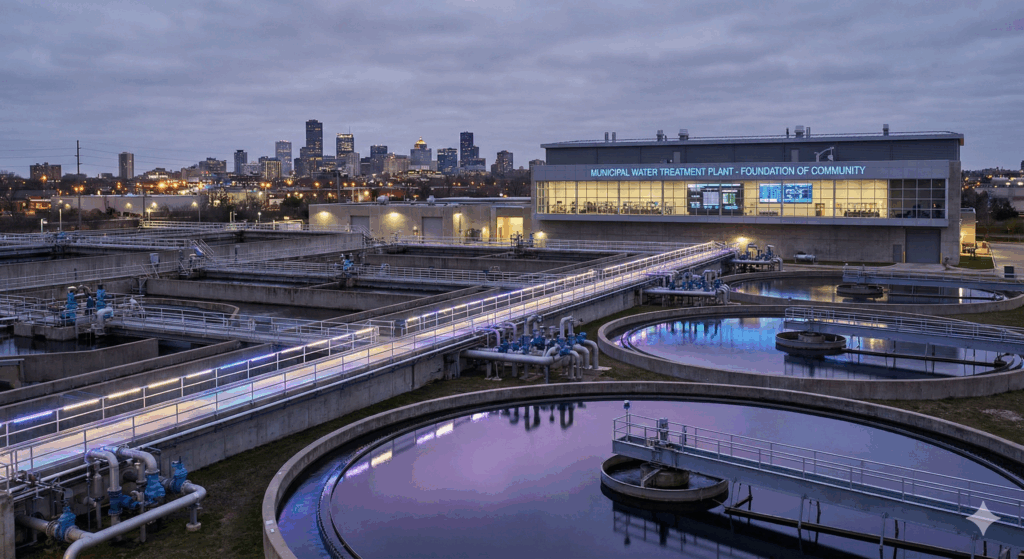
Water treatment is one of the least visible yet most essential components of modern infrastructure. Long before water reaches a household tap or an industrial process line, it has passed through a carefully engineered system designed to protect public health, ensure regulatory compliance, and support economic activity. When water treatment works well, it goes largely unnoticed; when it fails, the consequences are immediate and severe.
At its core, water treatment is about risk management. Raw water sources—whether surface water from rivers and reservoirs or groundwater from aquifers—contain a mix of physical, chemical, and biological contaminants. These may include suspended solids, pathogens, nutrients, metals, organic compounds, and emerging contaminants such as PFAS. Treatment systems are designed not to eliminate all uncertainty, but to reduce risk to acceptable, regulated levels through multiple layers of protection.
Conventional surface water treatment typically follows a sequence of processes: coagulation and flocculation, sedimentation, filtration, and disinfection. Coagulants destabilize fine particles, allowing them to clump together and settle out. Filtration then removes remaining particulates, while disinfection—increasingly achieved through a combination of chlorine, UV, or ozone—addresses microbial threats. Each step is engineered with redundancy and conservatism, recognizing that source water quality can change rapidly due to storms, seasonal runoff, or upstream land use.
Groundwater systems often require less treatment but present their own challenges. Naturally occurring contaminants such as arsenic, iron, manganese, or radionuclides may exceed safe limits and require targeted treatment processes. In some regions, nitrate contamination from agricultural activity has become a primary driver of new infrastructure investment. These systems demonstrate that water treatment is not a one-size-fits-all solution; it must be tailored to local hydrogeology and land-use patterns.
A defining challenge for water utilities today is aging infrastructure. Much of the United States’ water treatment and distribution systems were built in the mid-20th century and are now operating beyond their original design life. Facilities must be upgraded not only to replace failing equipment, but also to meet tighter regulatory standards and rising customer expectations for reliability. This places pressure on capital budgets and rate structures, particularly for small and mid-sized communities.
At the same time, water treatment is becoming more data-driven and energy-conscious. Advanced monitoring, automation, and process optimization allow operators to respond more quickly to changes in water quality while reducing chemical and energy use. Resilience planning—once a niche concern—is now central, as utilities prepare for extreme weather, drought, flooding, and power disruptions.
Ultimately, water treatment is a public trust. It sits at the intersection of engineering, regulation, environmental stewardship, and public health. Investments in treatment infrastructure rarely generate headlines, but they quietly enable everything else a community depends on—from hospitals and schools to industry and fire protection. In that sense, water treatment is not just a technical system; it is a foundational commitment to safety, reliability, and long-term resilience.