Valley View Pavement Markings
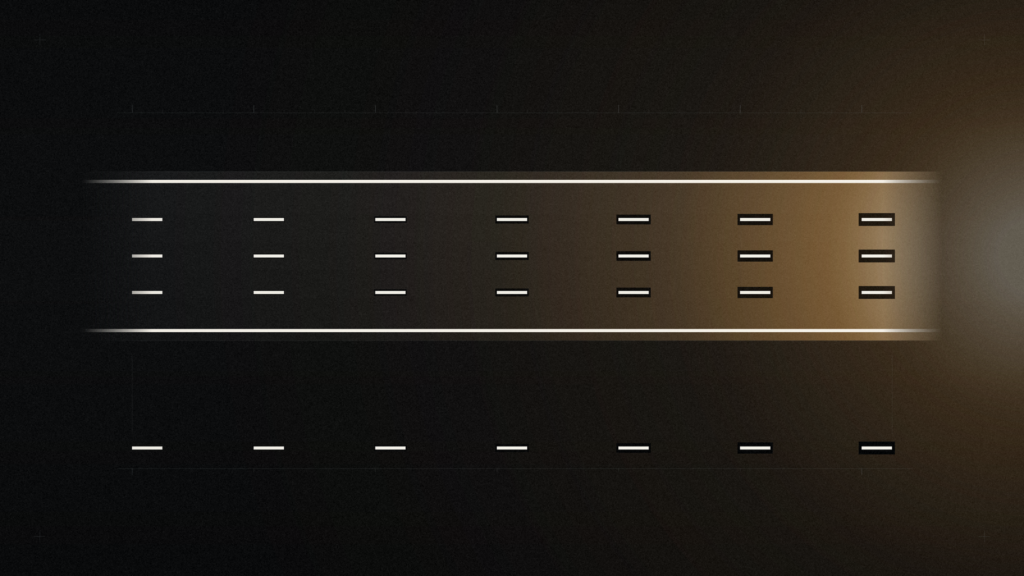
In the summer of 2006, I was working as the most junior engineer in the transportation engineering group in the basement of Dallas City Hall. We had a federalized project, being designed by the Texas Department of Transportation (TXDOT). Similar to other state departments of transportation, TXDOT had a research and development arm. One new application they were experimenting with was “shadow contouring” of east-west “skip stripes” (the white, dashed paint lines between lane going in the same direction on a road). A fellow junior engineer at TXDOT called me (I remember the call came in late in the afternoon, or perhaps it was an email, in which case I definitely remember reading it in the late in the afternoon). He asked if the City of Dallas wanted to try out the new shadow contouring. I didn’t know what shadow contouring was, so, I asked, “what’s shadow contouring”? He proceeded to explain that TXDOT was experimenting with a black paint component of the lane stripe, connected to the white portion of the lane stripe. It sounded like a good idea!
TXDOT had used this on the 635 reconstruction project in Dallas. The striping was applicable to east-west roads, due to the glare of the morning and evening sun. While I don’t know for sure, the Texas Transportation Institute in Arlington, in partnership with some of the state’s public research universities, had probably studied and published reports about these lane markings.
I slept on it, and thought that it was a good idea. I talked to my boss about it the next day, who was very open to creative ideas. He pointed out a problem. While the project was being let for construction by TXDOT, the right-of-way was the City of Dallas. Therefore, the city would be maintaining the street after construction was completed.
Restriping the street (due to utility cuts and everyday wear-and-tear) would be done by the Streets Department. The department had a Paving Manual, which standardized markings across the city, which, from a logistical standpoint, is very important for operations, maintenance, and overall continuity.
I called my TXDOT associate and explained this. Design proceeded with the standard City of Dallas pavement markings. It was an interesting idea, and, to this day, I still look at the shadow contouring with a curious eye when I see it out on the street.